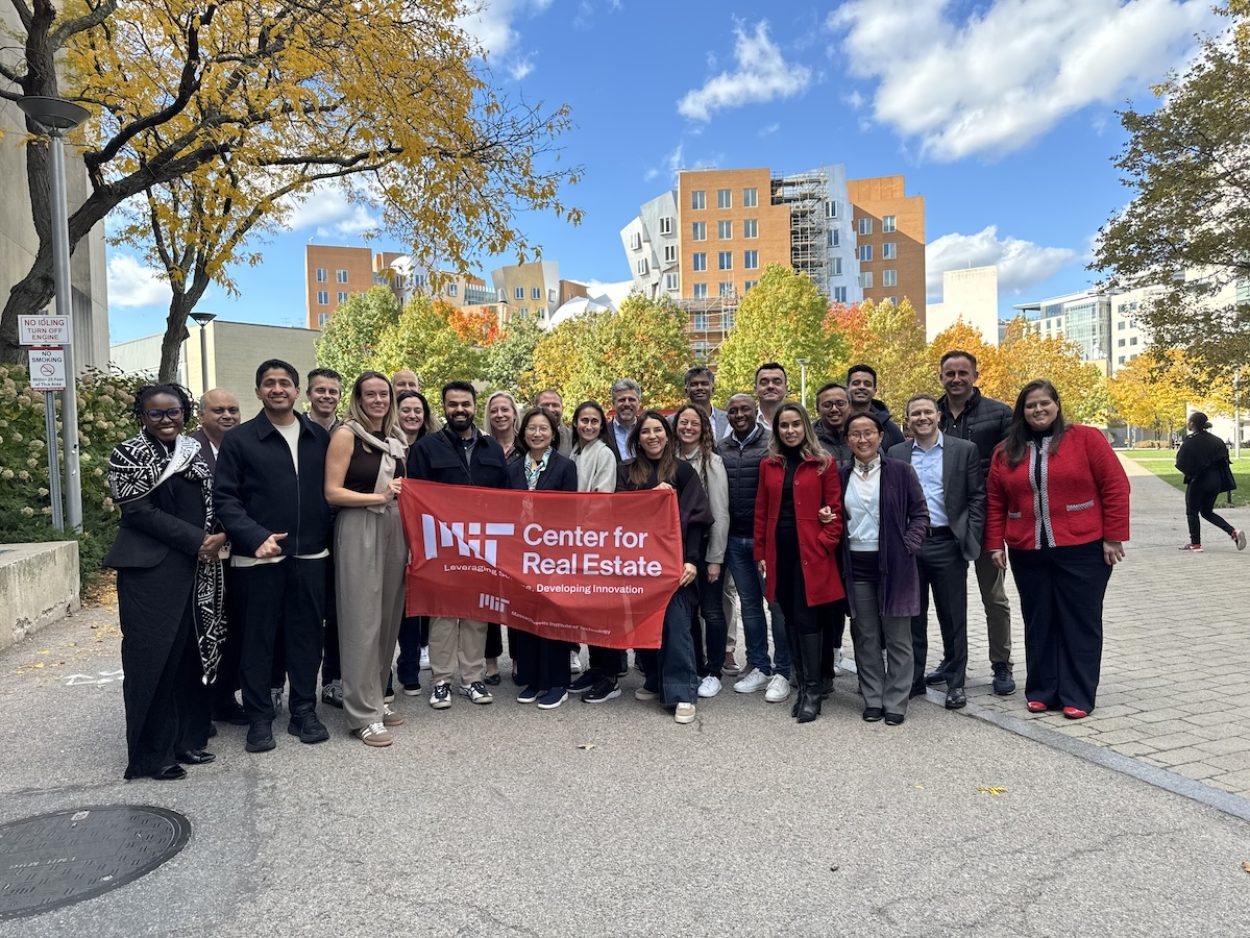
An MSRED student reflection on the Ventures I joint venture negotiation at Columbia Business School
By Jainil Shah
Earlier this semester, I participated in a full-day real estate joint venture negotiation workshop hosted at Columbia Business School, bringing together students from MIT, Columbia, and New York University Stern School of Business (NYU-Stern) for a live, institutionally grounded case exercise. The program was structured to mirror how joint ventures are negotiated in practice, culminating in real-time negotiations conducted in front of senior industry practitioners.
Negotiating the Impossible

The day began with a plenary session led by Tod McGrath, who teaches Ventures I & II at MIT, alongside Karen Holdridge, General Counsel at Boston Properties (BXP). Rather than walking through documentation mechanics, the session framed joint ventures as negotiated allocations of risk, control, and capital. The emphasis was not on what terms exist in a JV agreement, but on how specific provisions reallocate downside exposure and decision authority between sponsor and investor.
That framing proved essential as the day unfolded. Throughout the negotiations, it became clear that the economic coherence of a joint venture cannot be judged by headline IRRs alone. The discussion anchored repeatedly to a risk-adjusted framework, articulated through the Treynor ratio, to evaluate whether returns were commensurate with risk borne. When provisions such as first-loss funding obligations or guarantee structures shifted downside exposure to one party, the question was not whether the project still penciled, but whether the promote and waterfall continued to price risk appropriately. In several moments, the answer was clearly no, forcing renegotiation of economics rather than cosmetic adjustments.
Following the plenary session, students broke into negotiation rooms and were assigned opposing roles in a live case. I negotiated on behalf of the investor, which sharpened the focus on governance, capital call remedies, default mechanics, and exit rights. In that seat, the tension between alignment and protection became immediate. Control provisions that seemed benign on paper took on new weight once stress scenarios were introduced, particularly around cost overruns and failure-to-fund situations. The exercise reinforced how quickly mispriced risk can surface when conditions deteriorate.
Industry and Cross-Institute Connections
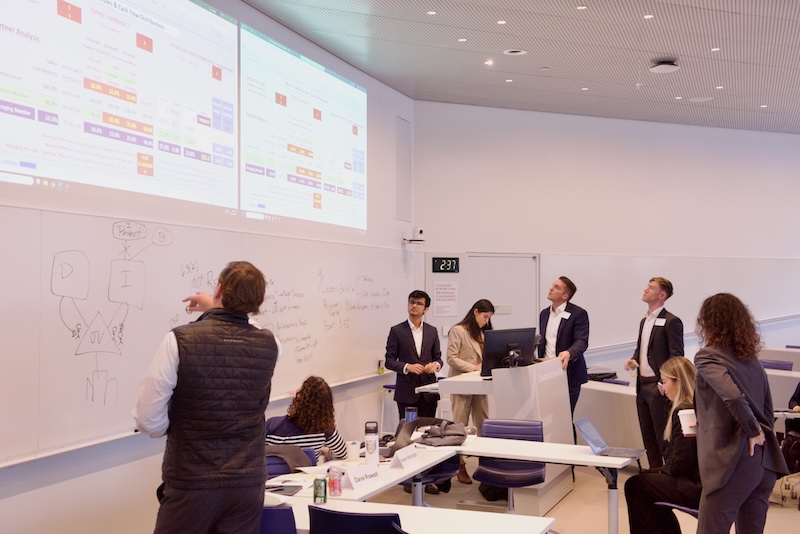
What elevated the experience significantly was the presence of senior practitioners serving as judges. The panel included leaders from some of the most sophisticated institutional platforms in the industry, including Karsten Kallevig of Prologis, Chris Taube of Goldman Sachs, Cia Buckley Marakovits of Dune Real Estate Partners, John Vickers of Tishman Realty & Construction, Karen Horstmann of La Caisse, and Dan Gutierrez of The Olayan Group, among others. Their feedback was direct and grounded in transaction experience. Rather than debating stylistic negotiation tactics, they focused on whether proposed structures would hold under stress, whether incentives remained aligned across scenarios, and whether control rights matched capital at risk.
Working alongside students from MIT, Columbia, and NYU brought together different analytical approaches and deal instincts.
Equally valuable was the peer environment. Working alongside students from MIT, Columbia, and NYU-Stern brought together different analytical approaches and deal instincts. The intensity of preparing, negotiating, and defending positions under scrutiny fostered a collaborative dynamic that felt closer to a deal team than a classroom. Many of those relationships have continued beyond the workshop.
Durable and Real Takeaways
By the end of the day, the central takeaway was clear. Joint venture negotiations are not about optimizing a single term or winning a point across the table. They are about pricing risk accurately, allocating control thoughtfully, and structuring incentives that remain aligned when things do not go according to plan. Experiencing that process live, with institutional scrutiny and immediate feedback, made the learning both durable and real.